
Apr 15, 2026
Building the missing layer for Uganda's small businesses
 Shafic Zziwa · 6 min read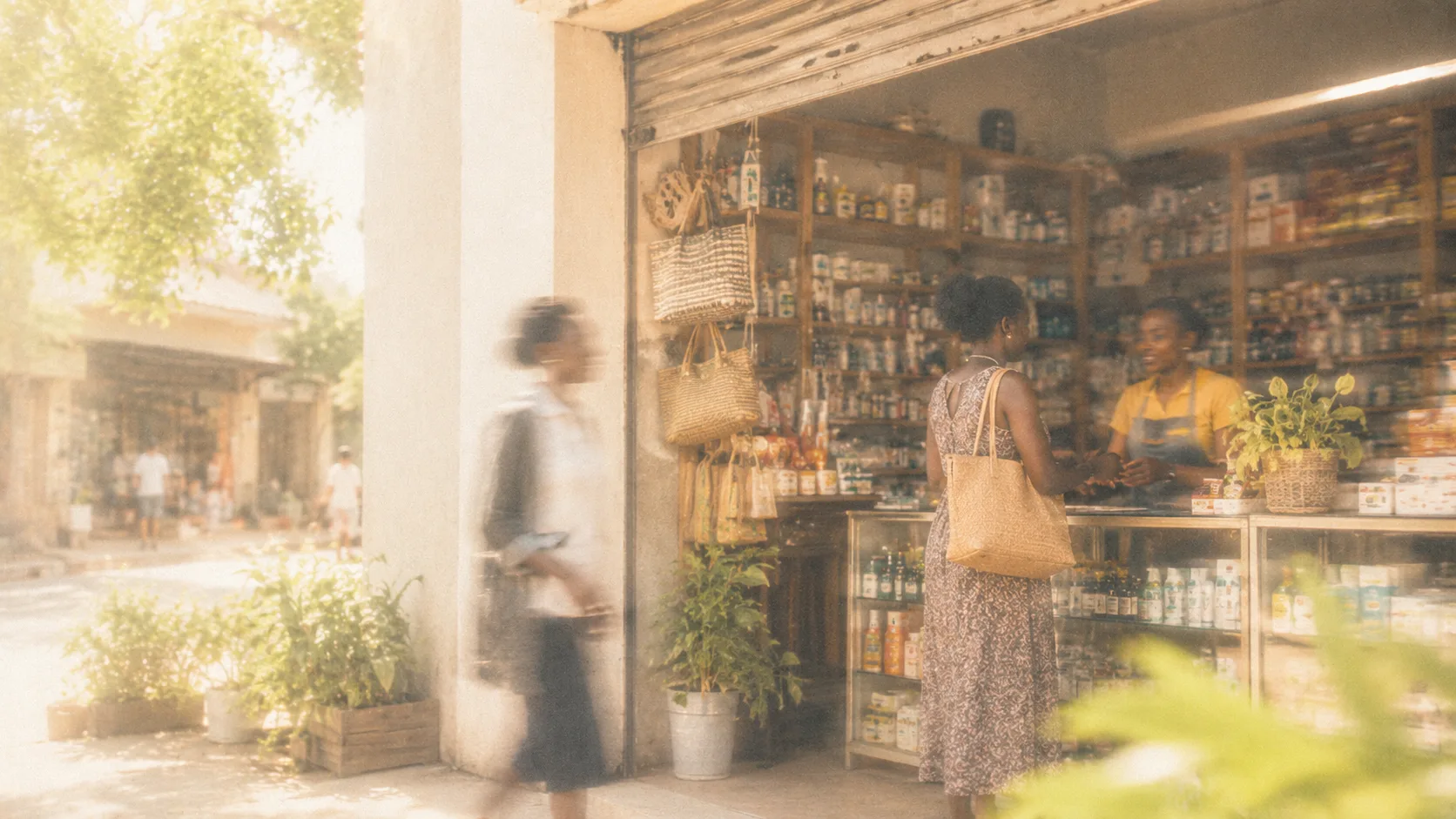
I've been thinking a lot about small businesses in Uganda, especially the ones already selling through WhatsApp, Instagram, TikTok, referrals, and physical shops.
The usual story makes it sound like these businesses are sitting around waiting to be saved. That framing feels wrong to me. When you actually look at what's happening, many of them are already doing the hard part. They are finding products, building trust, talking to customers, accepting mobile money, arranging deliveries, and learning what people want in real time.
That is a lot of progress already.
The opportunity is to give that energy a better system around it.
That's what we're building with Kampe.
Kampe is an online store builder for small businesses and social media sellers in Uganda. It helps a seller create a professional online store, upload products, receive orders, accept mobile money payments, and manage customers from one dashboard.
The simple version is that Kampe gives a business its own storefront online. The deeper thing we care about is ownership. A business should be able to own its brand, its customer relationships, its orders, its payments, and its growth.
A lot of online selling today starts inside conversations. Someone posts a product, a customer replies, then the back and forth begins. Is it available? How much? Do you have another color? Can you deliver? What is your mobile money number? Did you receive the payment? Can you send more photos?
That flow is familiar, and honestly, it works well enough at the beginning. It is fast, personal, and easy to start with. As the business gets more attention, the same flow becomes harder to manage. The seller ends up answering the same questions repeatedly, sending the same photos, tracking orders manually, and trying to remember which customer paid, which customer is still deciding, and which order needs delivery.
When the business grows, the system around it has to grow too.
This is the gap Kampe is focused on.
Most of the sellers we think about already have ambition. They are already moving. They already understand their customers better than any outside person could. What they need is a cleaner way to turn that demand into organized growth.
A professional storefront helps the business look credible from the first click. A product catalogue helps customers browse without waiting for every reply. Order management helps the seller avoid losing sales inside chats. Mobile money payments make checkout feel familiar. Customer records help the business build relationships beyond one-time transactions.
None of this needs to be complicated. In fact, the more I think about it, the more I believe the best tools for small businesses are the ones that feel obvious after you use them.
You should be able to create a store, add your products, share your link, and start receiving orders without needing a developer, a big budget, or a full technical team.
That is the direction we are building toward.
Recently, NTV featured Kampe on Innovation Nation. They described Kampe as an ecommerce platform built to support businesses in East Africa, especially Uganda, by helping sellers create branded online stores, manage products, track orders, handle customers, and receive payments through MTN and Airtel mobile money.
The feature was a cool moment for us. It also reminded us how early the work still is. Kampe is still improving. We are still learning from merchants, fixing rough edges, and trying to make the store experience better.
What mattered more was the bigger story the feature pointed to.
Uganda is moving deeper into a digital economy, and small businesses are already part of that shift. DataReportal's Digital 2025 Uganda report shows that millions of people in the country are online, with mobile connections playing a major role in how people access digital services. That matters because digital business here is already happening through the tools people use every day.
WhatsApp is already a sales channel. Instagram and TikTok already help customers discover products. Mobile money is already a normal way to pay. Delivery riders already help connect sellers and buyers across town. Physical shops, social media pages, and customer referrals are already working together in ways that are very local and very practical.
Kampe is built to connect those pieces better.
The future of commerce here will probably involve many channels working together. Some sales will still begin on WhatsApp. Some customers will discover businesses on TikTok or Instagram. Some buyers will still walk into physical shops. Marketplaces will still have their place too. As businesses grow, they need a home base they control, where their products, orders, payments, and customer relationships can live together.
That home base is what Kampe wants to provide.
For the seller, it means less time repeating the same information and more time serving customers. For the customer, it means a cleaner buying experience. They can browse products, understand what is available, place an order, and feel more confident that the business is real and organized.
That trust part is important.
A lot of small businesses are better than they look online. They have good products, loyal customers, and real work happening behind the scenes, while their digital presence does not always show that. A business might be serious, but if everything is scattered across chats and screenshots, new customers may not feel that confidence immediately.
A small business should not have to look small online.
That is one of the beliefs behind Kampe.
There are people building real businesses from bedrooms, hostels, market stalls, salons, pharmacies, kitchens, small shops, and phones. Some are just starting. Some are already growing. Some are still figuring out their next step. The energy is there, and the opportunity is real.
If the tools around them become better, more of that energy can turn into actual growth.
Likes, views, and "how much?" messages are useful signals. The next step is turning them into orders, customer relationships, payment records, sales visibility, and repeat buyers.
This is why we care about building an ecommerce website builder that fits the way Ugandan businesses actually sell. It has to work with mobile money. It has to make sense for social media sellers. It has to be simple enough for someone who does not want to spend weeks setting up a website. It has to help businesses look professional without making them feel like they need to become tech experts first.
UNCTAD has written about how digital tools, ecommerce, mobile money, and digital trade systems can help MSMEs become more competitive and connected. The everyday version is simple: when a business has better tools, it can serve customers better and grow with more confidence.
That is the work.
Kampe is still early, so I do not want this to sound like a big victory lap. We are building, testing, listening, and improving. There is a lot we still need to get right.
I do think there is something here.
Every time we talk to sellers, the pattern becomes clearer. They have effort, creativity, customers, and ambition. They need tools that match how they already sell and where they want to go next.
That is what Kampe is trying to become.
A simple, practical online store builder for businesses that want to own their digital presence, manage orders more clearly, accept mobile money payments, and build stronger relationships with their customers.
If you sell through WhatsApp, Instagram, TikTok, referrals, or a physical shop, and you are starting to feel like your business needs a cleaner home online, Kampe is being built for you.
Watch the NTV feature here. Then build your store with Kampe.
Still early, but the signal is real.